 LIMINAL
Selected work
Real builds for real operations.
The full version of each project — the problem, the build decisions, and where each one honestly stands. What shipped is marked shipped, and what's still coming is marked coming.
Platform rebuild
The Lockboxx
Migrated Lock's producer sound-kit platform off Shopify onto a fully custom Next.js stack on Vercel, giving him full creative control and cutting the platform fees the old setup carried. Built the membership layer underneath it — automated Discord role delivery on payment, plus a daily check that revokes access if a subscription lapses — ready for the Members Area launch.
Pushed to production days ago with an extremely smooth rollout — the first live e-commerce build handling real customer and payment data.
Lock sells sound kits to producers, and Shopify had become the wrong container for that: clunky to work in, limited in what the store could look like, and taking platform fees on every sale. The membership program he wanted to launch was something Shopify couldn't do well at all. So the site was rebuilt from scratch — Next.js on Vercel, Supabase behind it, Stripe handling payments — for full creative control and lower fees per sale, on a foundation the membership could actually run on.
That membership machinery is already built. When a payment clears, a Discord bot delivers the member role automatically; a daily job re-checks every subscription and revokes access if one lapses. Honest status: built, not yet live — the Members Area shows "Coming Soon" on the live site as of this writing.
This was also a threshold build in its own right — the first production e-commerce site I've shipped handling real customer and payment data. That raised the stakes on the cutover: real customers, real cards, no room for a broken checkout. It went out clean.
Demo coming soon
Arcade walkthrough — The Lockboxx
Self-directed build
AI Fluency War Room
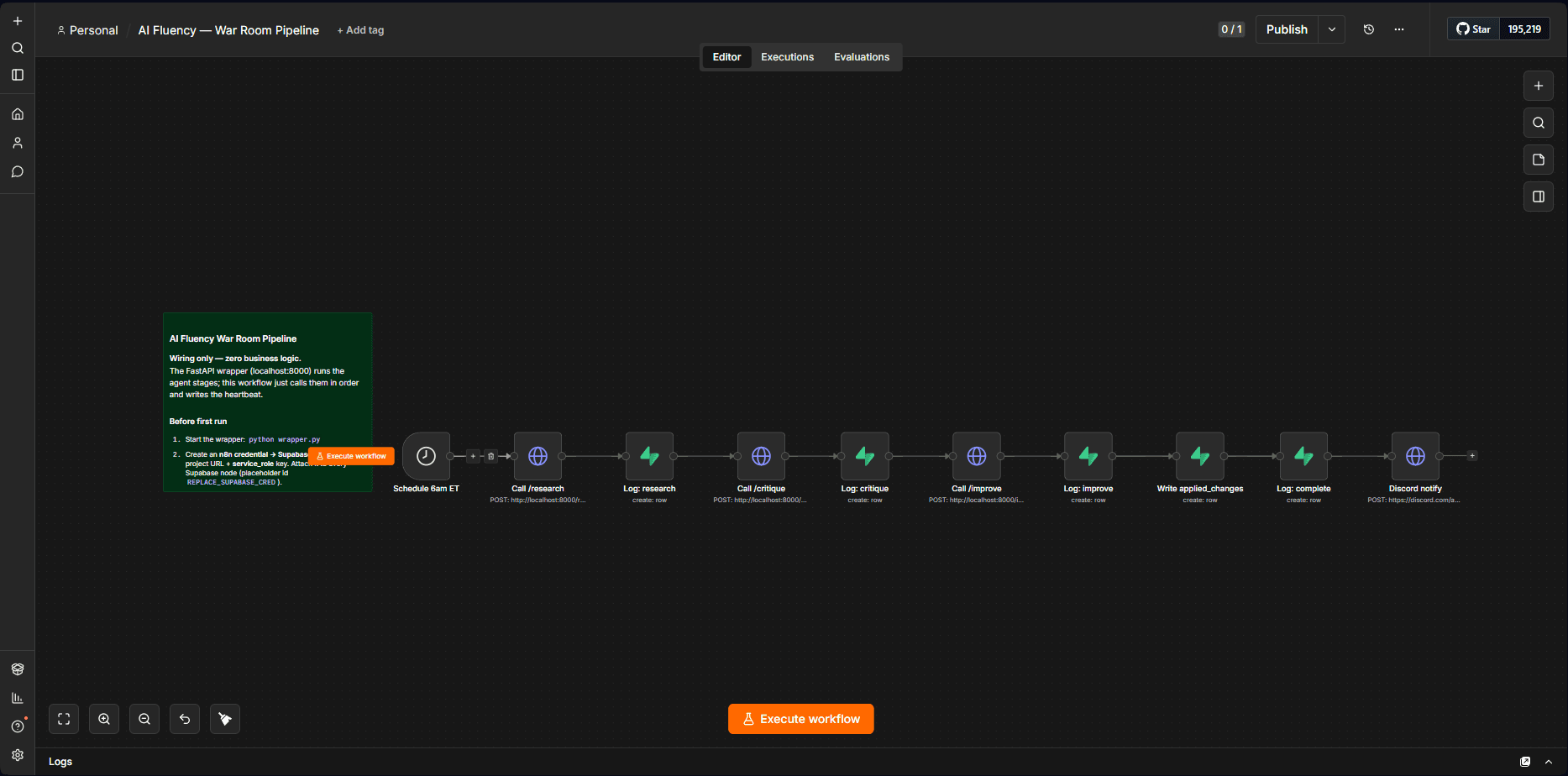
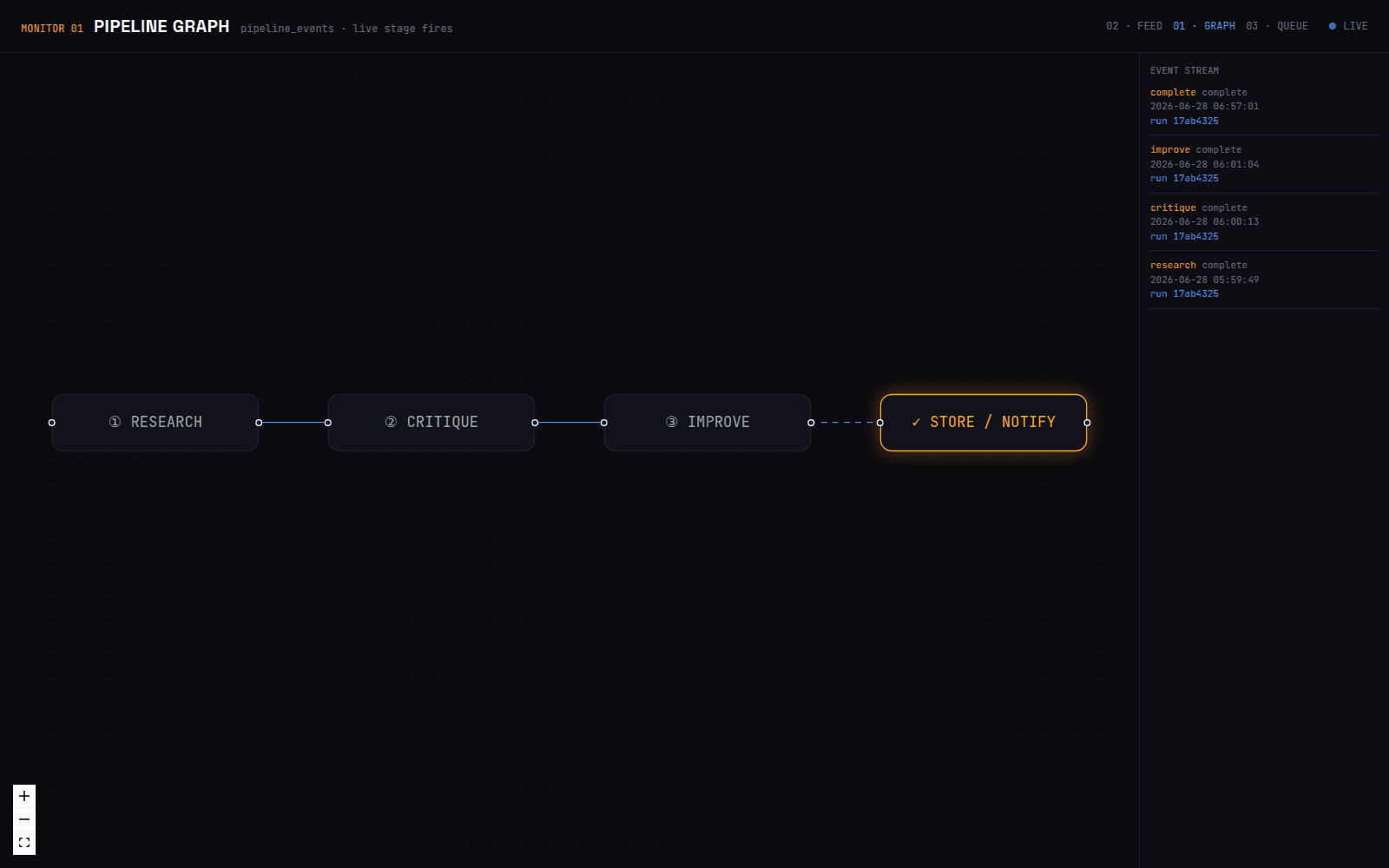
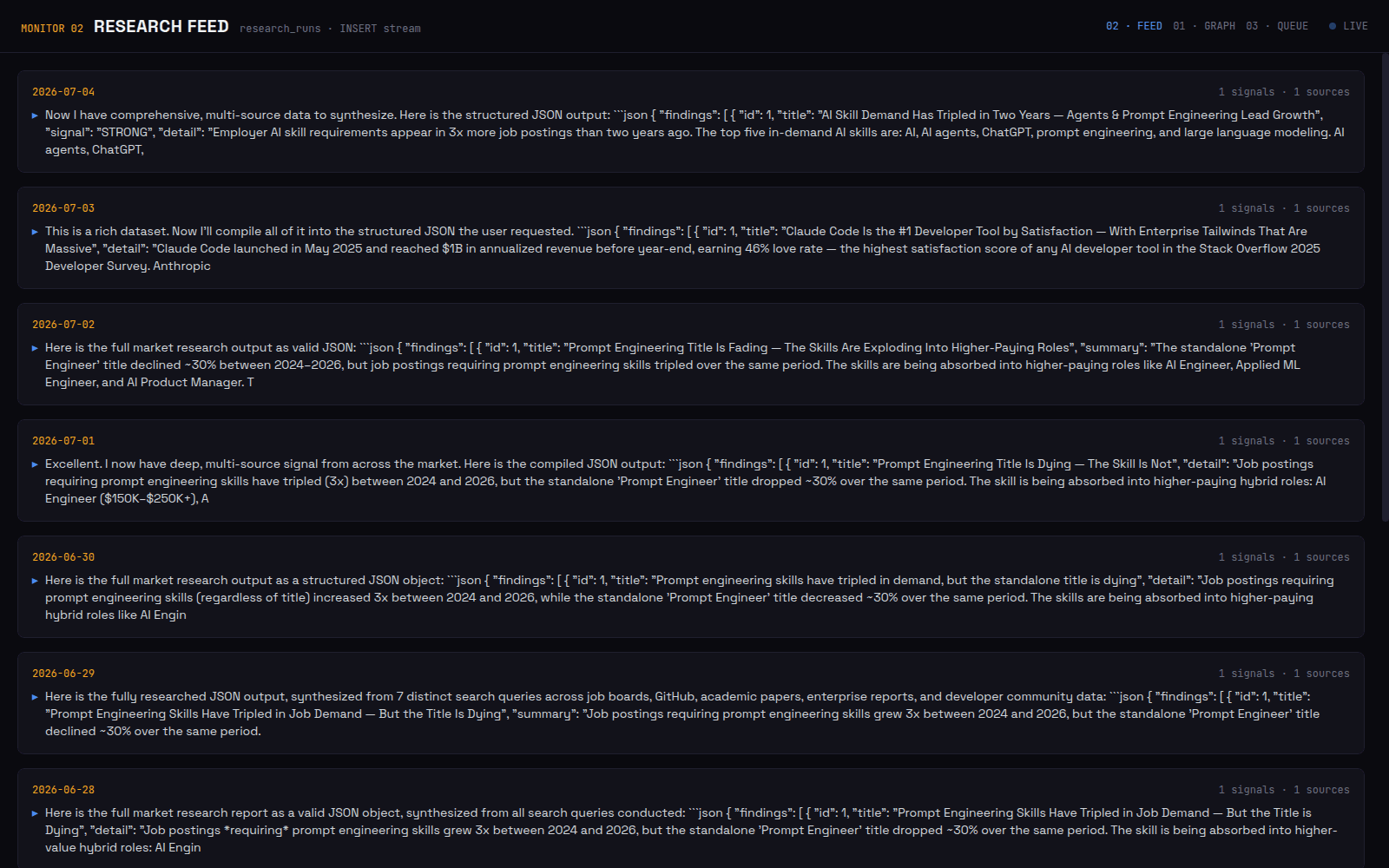
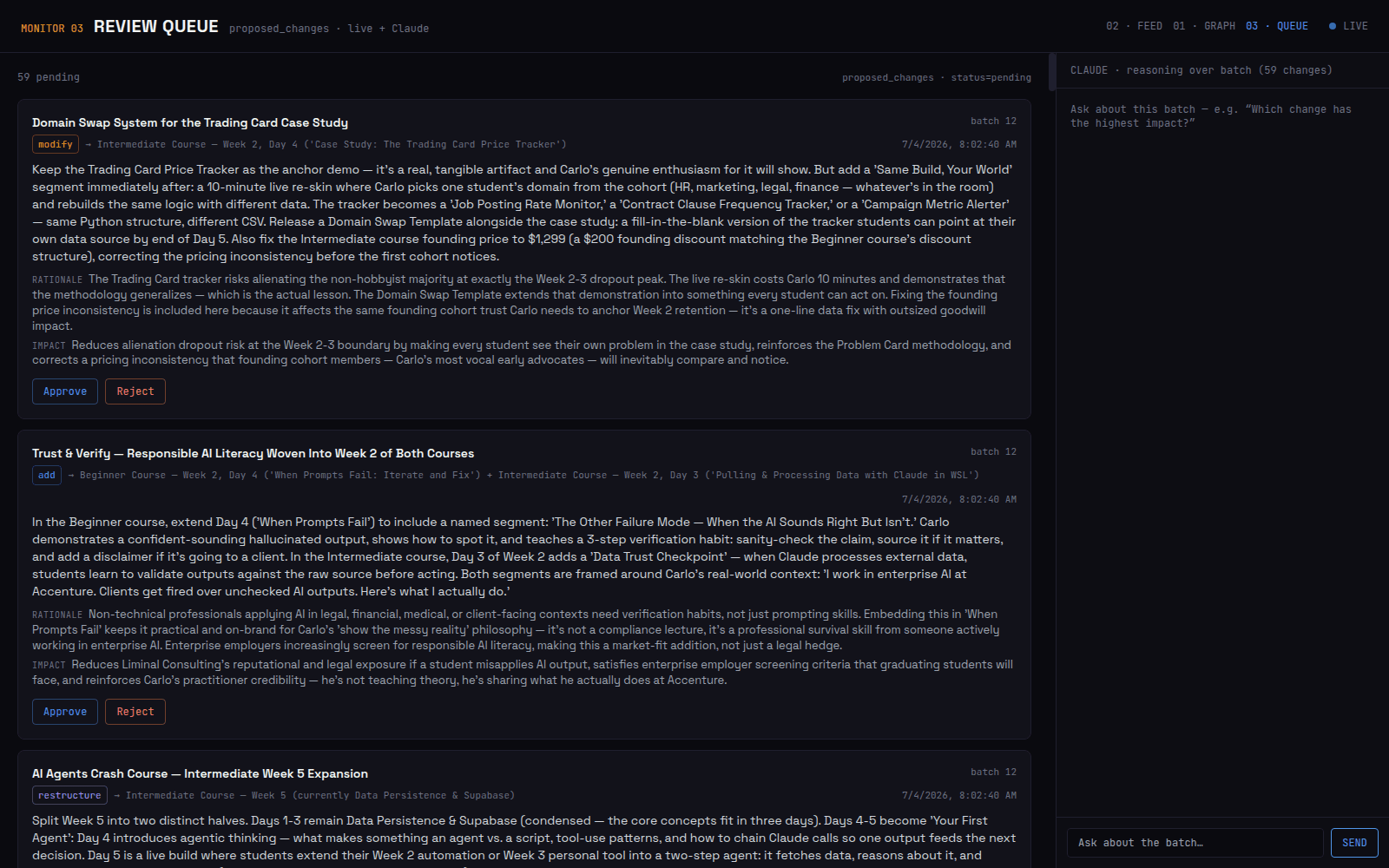
An autonomous, human-gated pipeline that researches, critiques, and proposes improvements to a bootcamp curriculum every night — then hands final say to a person. A self-hosted n8n scheduler kicks off a Claude-powered agent that researches the AI-education market, critiques the current curriculum against it, and writes concrete change proposals, without ever touching the live curriculum directly. Every stage streams into a three-monitor observability layer: a live pipeline graph, a research intel feed, and a review queue for approving or rejecting each change by hand.
Nothing reaches the live curriculum without a human reading the diff and confirming it — every version is snapshotted, so any applied change can be traced or rolled back.
This is a personal build, not a client engagement — and the bootcamp it serves isn't for sale here. I'm developing an AI-fluency curriculum on my own time, and the War Room exists to keep it sharp while I do: a self-directed project built to practice agentic-workflow skills — the same kind of work I do in enterprise IT — against a real, evolving artifact instead of a toy problem.
Every night, the self-hosted n8n scheduler kicks off a run. A Claude-powered agent, wrapped in a FastAPI service, researches the AI-education market, critiques the current curriculum against what it finds, and writes concrete change proposals. Each stage streams through Supabase Realtime into a Next.js dashboard laid out as three monitors — so there's never a moment where the pipeline is doing something I can't see.
The design rule that makes it trustworthy: the agent never touches the live curriculum. Proposals land in a review queue, where every diff is read and approved or rejected by hand, and every version is snapshotted before a change applies — so anything can be traced back or rolled back. The autonomy is in the research and the drafting; the authority stays human.
Demo coming soon
Arcade walkthrough — AI Fluency War Room
Service design
Local Website Program
Designed Liminal's own service model for local businesses: fully built websites with no upfront design bill, in exchange for a simple monthly plan instead of a large invoice.
The same model presented on this page to prospective clients — built and priced against real local-market data before asking anyone else to trust it.
The Local Website Program is the service model this site sells — and it went through the same treatment a client project would. Before pitching a single business, I researched the local market: what businesses around here actually pay for a website, what they get for it, and where they get stuck. The program was built and priced against that research first — the pitch came after the homework, not before.
The shape it took: a fully managed website on a simple monthly plan, with most builds carrying no upfront design bill; more complex builds — e-commerce, multiple locations, custom integrations — get scoped individually. Process automation stays a separate, request-only service: if a specific task is eating hours every week, it gets scoped on its own, never bundled in by default.
It's also the most personal project on this page. The program is the start of a path toward working for myself full-time, which means the model has to hold up in the real world, not just on paper. This site is the program running on itself.
Demo coming soon
Arcade walkthrough — the Liminal site itself
Small business automation
Pack Hype Collective
Automated two of the most time-consuming manual tasks running Pack's trading card storefront. One workflow pulls and consolidates daily orders across TCGPlayer, Wix, and eBay into a single bookkeeping sheet — previously done by hand, field by field, every day. The other scrapes live TCGPlayer secondary-market prices each morning, applies them across the matching product catalog, and displays them with a strikethrough against Pack's below-market pricing.
3–5 hours of manual data entry removed from the day, every day — work that would typically cost upwards of $2,000 to have custom-built.
Pack runs a trading card storefront — a family business selling across TCGPlayer, Wix, and eBay at once. Three channels meant three sets of daily orders, every one of them copied into the bookkeeping sheet by hand, field by field, every single day. The first automation took that job over, built by remoting into the business's own machine and automating the work in place — same sheet, same computer, no new platform to learn, no migration to sit through.
The second workflow handles pricing. An Apify scraper pulls live TCGPlayer secondary-market Pokémon prices every morning and applies them across the matching product catalog. On the storefront, each market price shows with a strikethrough next to Pack's own below-market price — so the deal isn't a claim, it's visible against the live market, every day.
Together, the two workflows gave back 3–5 hours a day that used to go to manual entry — the kind of build that typically costs $2,000 or more to have custom-made. And it was done the way this whole practice works: the same people still run the store, they just got their mornings back.